Cindy, a life fitness coach and author blogger, is one of the most enthusiastic, dynamic, and big-hearted people I know. Her wildly popular blog, Unique Times with Cindy, features delightfully eclectic content.
From fitness session videos, to entertaining stories about her family life, to vivid, meaningful poems, Cindy’s blog captivates. If you like photos of wildlife, cats, dogs, babies, and excursions to interesting locations, you will love Cindy’s blog!
Cindy, one of the busiest people I know, faces the challenges of life with determination and a wry sense of humor. Her wise and whimsical poems appear in several anthologies and online magazines.
Cindy just recently became a grandmother to two gorgeous little girls, and earlier this year, she published a remarkable best-selling book that is the culmination of thirty years of helping people. Recreate & Celebrate guides the reader step-by-step in setting goals for a healthy, fulfilling life and in planning strategies to achieve those goals. Each chapter includes a haiku by Cindy, a nice touch!
Earthly Days in paperback and in the Kindle edition is now immediately available on Amazon, shipping in 1-2 days. It is also available on Barnes & Noble.
The paperback, because of the many color photos, had to be priced at $18.99. The Kindle edition, because it has no printing costs, is priced at $2.99. I priced the Kindle edition as low as possible to make it easy for all my fellow bloggers to enjoy the book. I would be ecstatically happy and eternally grateful for any reviews you submit, and I will share them on my blog as I have shared the review above.
Below is the Preface and Acknowledgements page from Earthly Days. I have recognized my WordPress friends for all you mean to me. Every poem in Earthly Days is better because of the experience, knowledge, and inspiration gained from my fellow bloggers. I am deeply grateful. Thank you so much for your support.
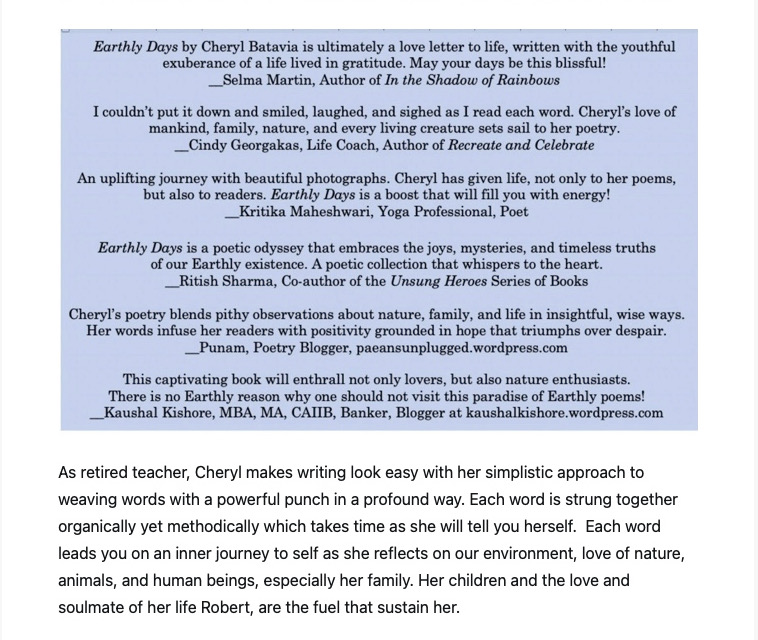
Thank you to those who have generously written such outstanding reviews and interviews. Your work is being used as a resource by my publisher in marketing Earthly Days. Your assistance in helping to launch Earthly Days is invaluable, and will be remembered always!
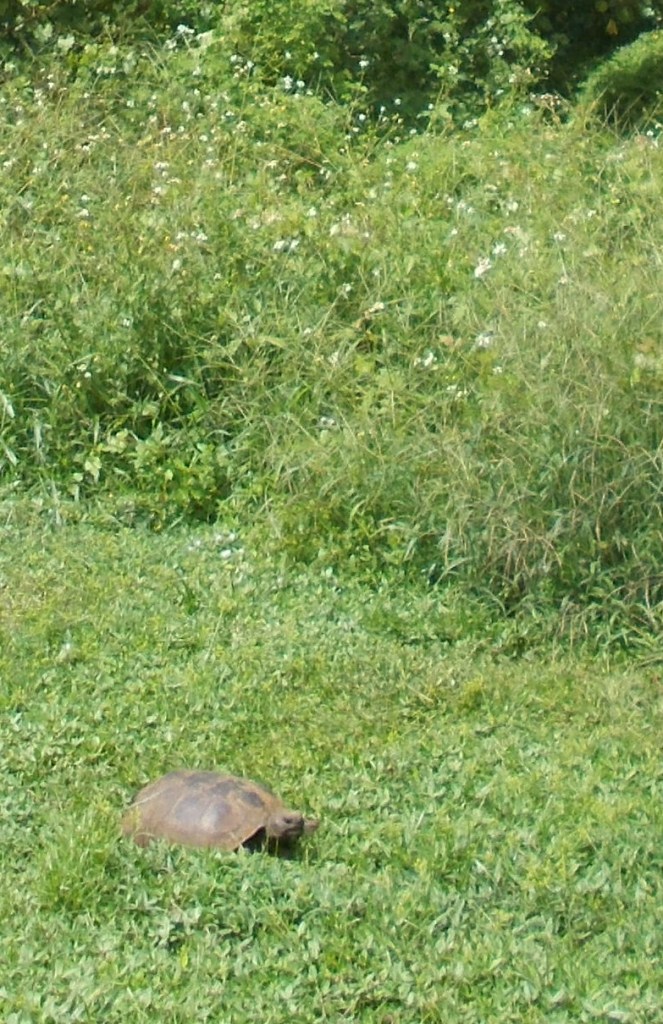
What a delightful visitor! All the rain has made it difficult for landscapers to keep up with mowing. This gopher tortoise noticed and paid us a visit. Robert found the tortoise grazing on our weedy, overgrown lawn next to the woods.
Gopher tortoises build extensive networks of underground burrows which they use for many generations. Other small animals also use these burrows. Many houses are being built in our largely wooded neighborhood, and the habitat of these endangered tortoises is rapidly disappearing.
Gopher Tortoises Displaced is my first garland shardoma.
A big thank you to David, who blogs at The Skeptics Kaddish, for talking me into writing a poem in this form. It was great fun writing this, David! ❤
A garland shardoma has seven verses. Each verse has a syllable count of 3/5/3/3/7/5 and is unrhymed. The seventh verse is composed of lines taken from the other verses.
War crimes are defined by an international law called the Geneva Conventions, ratified by all member nations of the United Nations. War crimes have been reported to have been committed by Russia against Ukraine and by both sides in the War between Hamas Militants and Israel. This is a partial list of war crimes.
Attacking civilian targets, assaulting and killing civilians
Destroying buildings used for purposes of religion, education, art, science, and charitable organizations. Also, historic monuments and hospitals
Intentional starvation of civilians or impeding delivery of relief supplies to civilians
Kidnapping and hostage-taking of civilians, use of civilians as human shields
Rape, forced prostitution, and sexual slavery
Torture
Threats have been made by Russia to use nuclear weapons. Other forbidden weapons include poison gas and biological warfare.
References
United Nations Office on Genocide Prevention and the Responsibility to Protect
Topics: Genocide, Crimes against Humanity, War Crimes, and Ethnic Cleasning
United Nations Commission of Inquiry
This commission is investigating evidence of war crimes committed by all sides in Israel and occupied Palestinian territories since 7 October 2023.
Israel is being investigated for witholding food, water, electricity, and fuel in Gaza.
Hamas is under investigation for gunning down unarmed civilians, taking civilian hostages, and using civilians as human shields.
Animals in many places are responding to climate change by changing their behaviors. Warming seawater has resulted in a decrease in the number of krill, a tiny shrimp that is the primary food of humpback whales.
One group of whales have adapted by finding a new food source, salmon fry from a hatchery in British Columbia whose mission is to replenish the dwindling salmon population. One whale changed his diet from krill to salmon fry. He feasted when the salmon fry were released from their net enclosures.
Humans then started transporting the fry a mile away to release them. The whale followed the boat and adapted by learning to fish in the shallow water. Then he recruited a team of his buddies to fish in teams as dolphins do. I guess the hatchery will have to produce a much larger crop of salmon fry to feed the hungry humpback whales and still have enough salmon for human fishermen!
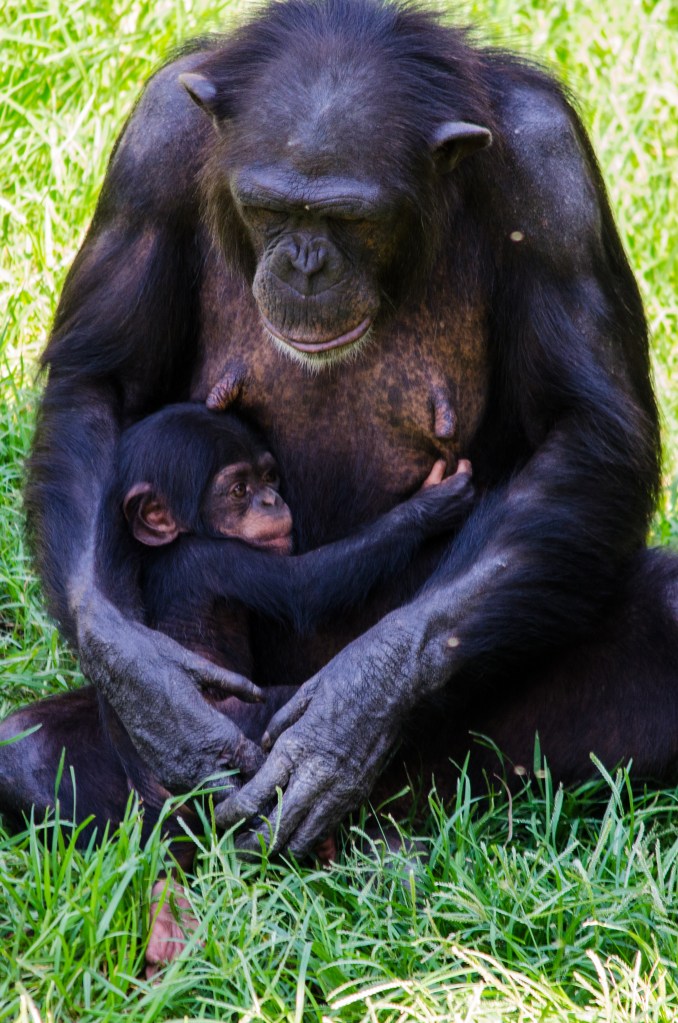
A group of forest chimpanzees migrated to the savannah of Senegal. The climate was hotter, there were fewer trees, and sources of food were far apart. The chimps responded to the heat by growing less body hair. They established larger territories. Because there were fewer trees, chimps spent more time walking upright than their forest relatives, who usually travel by swinging through the treetops.
Because there was less fruit to serve as a source of water, they had to find fresh water sources. To purify mucky water, they learned to dig holes in sandy riverbanks. When the water filtered through the sand, the holes were filled with clean water for the chimps to drink.
As a source of protein, the savannah chimps use twigs to fish for termites, spending much more time in this activity than forest chimps do. In the middle of the day, when weather is hot, these chimps seek shelter in caves, as early humans once did.
As the climate warms, the savannah will become many degrees hotter. Water sources will dry up. Life will become even more difficult for the savannah chimps. Will they be able to survive?
Marine Iguanas, famously studied by Charles Darwin, live in the Galapagos Islands, a harsh environment. To survive hot weather, they shrink their bodies. In cooler periods, they regrow to their usual size. Too long in cold water, iguanas face hypothermia, which can be fatal. Can marine Iguanas survive global warming?
For more information, watch the PBS video on YouTube, “Earth is Changing (and Animals are Adapting in Surprising Ways.)” Evolution Earth

























 Gulf Coast Poet