
Humpback Whale. Photo by Cheryl Emerick from Unsplash
Humpback Whales, British Columbia
A hungry humpback named Harry
said: this krill shortage can be quite scary.
It’s just climate change; don’t be alarmed…
Your buddy Harry’s found a salmon farm.
We can outsmart the humans…Don’t worry!
A gourmet menu we will enjoy
when new fishing strategies we employ.
Fishing in shallow waters we can do.
Dolphins fish together…we can too!
Now don’t you think Harry’s a smart boy?
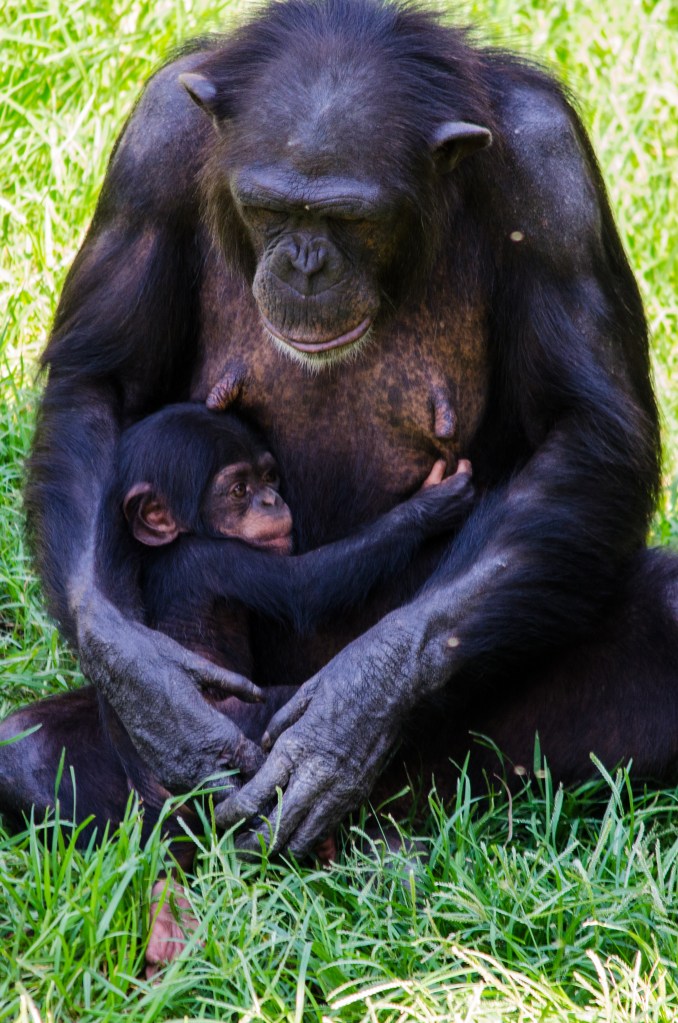
Forest Chimpanzees. Photo by Andrea Acanfera from Pexels
Savannah Chimpanzees, Senegal
Some chimpanzees left their forest home.
The scorching Savannah they did roam.
Scarce resources required large territories,
more walking upright with fewer trees.
It would get even hotter in years to come!
Global warming? We’ll shed some hair!
Hungry? More termite fishing…Who cares?
Thirsty? There’s a river…We’re in luck!
We’ll dig a little hole and filter out the muck.
We’re Savannah Chimps and proud of living here!

Marine Iguana, Galapagos. Photo by Michael Gerrard from Pexels
Marine Iguana, Galapagos Islands
Darwin studied iguanas; so fascinated was he
with the only lizards that swim in the sea!
Hypothermia, though, is a threat…
Global warming makes rocks hotter yet!
Iguanas can adapt remarkably…
Marine Iguanas shrink in el Nino.
Amazingly, in la Nina, they regrow!
Bone is reabsorbed to shorten their spines;
bone is regrown in cooler times…
Can they survive climate change? We don’t know!
Copyright© 2023 by Cheryl Batavia
Is Global Warming speeding up animal evolution?
Animals in many places are responding to climate change by changing their behaviors. Warming seawater has resulted in a decrease in the number of krill, a tiny shrimp that is the primary food of humpback whales.
One group of whales have adapted by finding a new food source, salmon fry from a hatchery in British Columbia whose mission is to replenish the dwindling salmon population. One whale changed his diet from krill to salmon fry. He feasted when the salmon fry were released from their net enclosures.
Humans then started transporting the fry a mile away to release them. The whale followed the boat and adapted by learning to fish in the shallow water. Then he recruited a team of his buddies to fish in teams as dolphins do. I guess the hatchery will have to produce a much larger crop of salmon fry to feed the hungry humpback whales and still have enough salmon for human fishermen!
A group of forest chimpanzees migrated to the savannah of Senegal. The climate was hotter, there were fewer trees, and sources of food were far apart. The chimps responded to the heat by growing less body hair. They established larger territories. Because there were fewer trees, chimps spent more time walking upright than their forest relatives, who usually travel by swinging through the treetops.
Because there was less fruit to serve as a source of water, they had to find fresh water sources. To purify mucky water, they learned to dig holes in sandy riverbanks. When the water filtered through the sand, the holes were filled with clean water for the chimps to drink.
As a source of protein, the savannah chimps use twigs to fish for termites, spending much more time in this activity than forest chimps do. In the middle of the day, when weather is hot, these chimps seek shelter in caves, as early humans once did.
As the climate warms, the savannah will become many degrees hotter. Water sources will dry up. Life will become even more difficult for the savannah chimps. Will they be able to survive?
Marine Iguanas, famously studied by Charles Darwin, live in the Galapagos Islands, a harsh environment. To survive hot weather, they shrink their bodies. In cooler periods, they regrow to their usual size. Too long in cold water, iguanas face hypothermia, which can be fatal. Can marine Iguanas survive global warming?
For more information, watch the PBS video on YouTube, “Earth is Changing (and Animals are Adapting in Surprising Ways.)” Evolution Earth
https://to.pbs.org/44Cuts5|#EvolutionEarthPBS


Earthly Days is available on Amazon and Barnes & Noble
in both softcover and Kindle version.
 Gulf Coast Poet
I have seen poets, seen nature lovers but a blend of these with animal love is worth a hundred salutes. Thanks for the lovely share with due concerns raised.
LikeLiked by 5 people
Thank you, JM, for your very kind comment. I deeply appreciate it. ❤ So glad you like the post!
LikeLiked by 1 person
👏👏
LikeLiked by 1 person
S great way to highlight these stories Cheryl. I had never heard that of marine iguanas. That’s really interesting. Maggie
LikeLiked by 3 people
Thamk you Maggie, for your thoughtful comment. ❤ I didn't know about marine iguanas changing their size either until I saw it on the PBS video on YouTube. 🙂
LikeLiked by 2 people
Thank you, Cheryl, for your poems/stories! Outstanding! ❤️
LikeLiked by 2 people
So happy you liked the poems, Filipa! ❤ Thank you so much for your lovely response!
LikeLike
Thank heavens they have the ability to adapt faster than us – as we are the ones causing the damage! I look forward to the book’s publication, Cheryl 📖 ❤️
LikeLiked by 2 people
How true! Thank you for your thoughtful comment and kind words, Ingrid! ❤ ❤ ❤ The book is out on Barnes and Noble and for preorder on Amazon. The digital version is to come.
LikeLiked by 2 people
I’m going to wait for the paperback to be available on Amazon, as it’s easier for me to order that way in the UK! ❤️
LikeLiked by 1 person
A thought provoking read. They are smart. They are at least aware of themselves. They are mindful of how and when to react. I adore them. Thank you for sharing this information Cheryl 🙂 Have a beautiful day!
LikeLiked by 1 person
Thank you, Kritika, for your thoughtful response. ❤ The ability of animals to adapt to changes in their environment is amazing! They are a good example for humans who are often resistant to change. 🙂
LikeLiked by 1 person
Oh yes! Animals are a good example. But humans want to be contained in a box because its secure. 😀
This is an awesome post Cheryl. I would love to write on it. Thank you for inspiring me 🙂
LikeLiked by 1 person
Thank you for your kind comments, Kritika. ❤ I hope you can access the entire YouTube video. If not, you may be able to see several of the shorter segments that make up the longer video by going to Evolution Earth, PBS on YouTube. I would be very interested to see your take on these issues. 🙂
LikeLiked by 1 person
Surely will do watch them. Thank you kindly Cheryl 🙂 (heart)
LikeLiked by 1 person
A delightful and interesting post, Cheryl! The intelligence of animals far surpasses that of human, IMO. ❤️
LikeLiked by 1 person
Eugi, so happy you enjoyed the post. It surely seems that animals are smarter than we are at times, Human beings often fail to act in their own best interests. Thank you for your insightful comment. ❤
LikeLiked by 1 person
My pleasure, Cheryl. ❤️
LikeLiked by 1 person
A a former EPO Bio major in college (Environmental, Populational & Organismic) I really appreciate your steady updates in the realm of biology within the context of our current environment. And as an (he)artist, I appreciate your vehicle of transmission of said info VIA poetry. Thank you so much for these insight into the ever present workings of God’s creation doing what they always do: adapt & change as best they can – we should stand in awe and learn!
LikeLiked by 2 people
Laura, your comment says it so well! ❤ We need to watch and learn. Your science credentials are impressive. Now I have some insight into your beautiful composition,"Goat Suite." I really enjoy listening to your music when you post it.
Thank you so much for your kind words. My knowledge of science is pretty rudimentary, but as an elementary teacher, I learned that students found science interesting and fun, especially hands-on activities. One of the most delightful gifts I received as a teacher was an orb weaver spider in a jar. Have a great day, Laura! 🙂
LikeLiked by 1 person
Those critters get huge here in SC – first encounter upon moving here was a jolt (webbed across two houses, gorgeous but huge Orb in middle of web, almost walked right into it!!! Then watching them do their weaving – phenomenal!
You have a great day too!
🙂
LikeLiked by 1 person
I’m glad you’re bringing awareness to these problems by showing how nature is adapting. Your book looks really good!
LikeLiked by 1 person
Thank you so much, Kymber, for your very kind comment. ❤ It means a lot to me. I believe that working together, we can solve our environmental problems.
LikeLiked by 1 person
I believe so, too. xo
LikeLiked by 1 person
❤
LikeLiked by 1 person
Animal adaptability to changing climate is strange, but you have nicely put your minute observations both in prose and verses. An informative and thought provoking post, Cheryl 👍💖
LikeLiked by 3 people
Thank you, KK. ❤ The savannah chimpanzee information in the PBS video comes from a twenty-year study in Senegal. Fascinating! The Marine Iguana researchers took a portable X-ray machine to the beach to document changes in the animals' spines. The humpback whales have been outsmarting hatchery personnel for ten years. The footage is incredible!
Glad you found this post informative and thought-provoking. I hope you can get the YouTube video!
LikeLiked by 1 person
Thank you so much, Cheryl, for being kind enough to provide additional fascinating details. I would look for the video. Thanks again 💖💐
LikeLiked by 1 person
Very informative post and well expressed in poetic form. Adapt or go extinct. The same goes for the human species. So glad that your poetry collection is also available at Barnes & Noble.
LikeLiked by 1 person
Thank you, Rosaliene, for your kind and thoughtful response. ❤ I agree that humans must adapt or go extinct. Scary thought!
LikeLiked by 1 person
Animals are adaptable; it’s just heartbreaking that they are forced to make survival changes based on the choices of humans. 💔 Thank you for this meaningful post, Cheryl.
LikeLike
Thank you, Miclele for sharing your perspective on that! I certainly agree with you. Human beings see themselves as victims in climate change, but we need to abandon the victim mentality and be aware of our responsibility in this. The animals have no control over what happens, and no choice except to adapt if they want to survive.
Thank you so much, Miclele, for your valuable input! ❤
LikeLiked by 1 person
You are welcome, Cheryl. I appreciate you and your creative and valuable contributions. ❤
LikeLiked by 1 person
Your love of the earth and nature in this poem is so heartfelt Cheryl!
💕❤️💕
LikeLiked by 1 person
Thank you so much, Cindy, for your beautiful response! ❤ ❤ ❤
LikeLiked by 1 person
You’re so very welcome Cheryl, Always💕💕💕
LikeLiked by 1 person
It is so sad….how the animals had to make the brutal adjustments because of us humans…😔
LikeLiked by 1 person
Thank you for your empathetic comment, Mich. ❤ Yes, I admire their adaptability, but I know many species will suffer and may become extinct.
LikeLiked by 1 person
creatures do adapt, our Traditional Land Owners have survived through some traumatic climate changes over 60,000 years … we can do it but we can also STOP it 🙂
LikeLiked by 1 person
I so agree with you, Kate! There so many, many things we need to do to stop climate change! Thank you for sharing your thoughts. ❤
LikeLiked by 1 person
I love this post and the beautiful nature poem. What a great way to learn about new things happening in our environment. Since people just continue to go about denying that global climate issues even exist, what a great approach and providing such informative information. What a lovely thing to do as a retired teacher. I have always had the most respect for teachers and feel like they are very special people. They shape the minds of our future leaders. Hopefully those little ones whose parents are reading your books and poetry to their children will make a big difference. I salute your lovely words and the message they bring forward. My husband even saves earthworms on the pavement. Thank you for what you do! Hugs, Joni
LikeLiked by 3 people
Joni, I am deeply grateful for your very kind words! Thank you for sharing your thoughts. ❤ It makes me so happy that you enjoyed the poem!
Kudos to your husband for rescuing earthworms. They are beneficial animals who deserve recognition for the part they play in organic agriculture. Carbon farming reclaims worn-out soil, purifies air, and stops run-off that polutes waterways. Earthworms return to do their part! ❤
Have a blissful day!
LikeLike
I worry about these animals and hope they continue to adapt. Thank you for the hope.
LikeLiked by 1 person
The ability of animals to adapt is amazing, but there are limits. I, too, hope that they can survive! Thank you so much, JoAnna, for your thoughtful comment. ❤
LikeLiked by 1 person
What a fascinating post, Cheryl. It points to both resilience and the unintended impacts of climate change. It makes me hopeful that these species can survive while we work to fix our environment. Thank you!
LikeLiked by 1 person
Thank you, Wynne, for sharing your thoughts. I like the hopefulness in your words “while we work to fix our environment.” ❤ Have a beautiful week!
LikeLiked by 1 person
Cheryl, thank you for this hope-filled post. I believe other animals will adapt better than humans. Only fitting, since we humans are the ones responsible for the mess! ☀️
LikeLiked by 1 person
Thank you for your insightful response, Lisa! ❤ ❤ ❤ I certainly agree with you about animal survival, and appreciate your kind words!
LikeLiked by 1 person