
I. Timeline: 1783-1869
II. Poems of the Westward Migration
III. My Favorite Classic Westerns


Timeline: 1783-1869
1783
The Thirteen Colonies won their independence from England. The United States of America at this time consisted of thirteen states which extended to the Mississippi River on the west. Territories to the south and west were controlled by Spain, France, and Russia. Canadian borders were being established to the north. Of course, Native Americans already lived in the Americas when Europeans arrived, a fact Europeans often chose to ignore.
Mountain men were fur traders and trappers who explored the American West. They lived among the Native Americans, learned tribal languages, and often married Native American wives.
1803
The Louisiana Purchase. The US bought the Louisiana Territory from France. President Thomas Jefferson sent the Lewis & Clark Expedition to explore the West. Their journals recorded the topography, Native American tribes they visited, and plants and animals they found.
Sacagawea, a sixteen-year-old Native American guide and translator, joined the expedition with her French Canadian explorer husband and infant son. She was invaluable to the expedition, and in 1794, a one dollar coin was first minted in her honor. On the coin is an image of Sacagawea carrying her baby on her back.
1803-1841
The Western Expansion. Settlers moved to land West of the Mississippi River, traveling on foot, on horseback, and by canoes, river rafts, and Conestoga wagons.
The US continued to purchase territories. A doctrine called “Manifest Destiny” stated that it was ordained by God that the US should occupy all the land from the Atlantic Ocean to the Pacific Ocean.
Native Americans resisted the takeover of their land. There were many conflicts and wars between the Settlers, US soldiers, and the Native Americans. US soldiers manned numerous forts along the trail to protect the wagon trains and the settlers who now lived on the Great Plains.
1841-1869
The Great Migration. During this time, 350,000 settlers traveled to California and the Oregon Territories. Steam-powered riverboats and eventually stage coaches became available. Telegraph lines soon linked East and West. The US now stretched from the Atlantic Ocean to the Pacific Ocean.
Many new states had been admitted to the Union as settlers moved west, some where slavery was legal, and some where slavery was illegal. This was a tumultuous time in American history which culminated in a bloody civil war.
1849
Gold was discovered in California, and the California Gold Rush began. “Forty-niners” went to California in search of gold. A few of them did “strike it rich.” Many more did not.
Towns sprang up where gold and silver were discovered. When the mines played out, the towns were abandoned. Ghost Towns still exist in the American West.
1861-1865
The American Civil War was fought between the Union (Northern States) and the Confederacy (Southern States.) It was a devastating and bloody conflict that centered around issues of slavery.
1869
The First Transcontinental Railroad was completed, joining East and West. This marked the end of the Era known as the Great Migration.
Copyright© 2021 by Cheryl Batavia
Poems of the Westward Migration

Mountain Men
Mountain men roamed the wilderness
and lived among the tribes,
learning tribal languages
and taking native wives.
They knew the animals and seasons
and walked the forest ways,
trapping beaver along the rivers
in long, solitary days.
Gentlemen in London and Paris
wanted to make the right impression.
American beavers died for the sake
of fashion’s beaver hat obsession.
Mountain men gathered
when the season was through
to trade their furs and celebrate
their yearly Rendezvous.

Native Americans
Native Americans, on many occasions,
helped European settlers survive,
but goodwill soon evaporated
when the multitudes arrived.
An endless stream of intruders
settled on ancestral lands.
Smallpox and measles took a toll.
Others died by White men’s hands.
Native Americans were pushed
further westward for years and years.
Their lands were seized, and they were
forced to walk the “Trail of Tears.”
Treaties dishonored, promises broken.
Natives were confined to reservations.
Their children were sent to far-off schools
for White man’s education.

Wagon Trains Go West
Carrying the settlers’ worldly goods,
Conestoga wagons crossed the plains.
For protection against Native American
attacks, they traveled in wagon trains.
A wagon master led the wagon train
and guided settlers on their way.
He knew where to ford the rivers and
where to camp at the end of the day.
Many settlers walked along the trail
to spare the oxen and lighten the load.
At night they circled the wagons and
cooked their suppers beside the road.
Babies were born along the trail.
Settlers played music and danced.
Couples were married on the journey
after a wagon train romance.
Dreams were big, and hopes were high,
but there were hardships every day.
The trail was littered with broken wagons,
and graves were left along the way.

The Great Migration
The US army manned a series of forts
to defend the wagon trains
and protect the settlements springing up
across the western plains.
Gold was discovered in California.
Settlers traveled the Oregon Trail.
Stage coaches soon headed west,
carrying passengers and mail.
New states were joining the Union,
some slave, and some free.
It was a dark and turbulent era
in American History.
Five years of civil war
brought widespread devastation.
The Transcontinental Railroad
ended the era of Great Migration.

Cowboy Life
Cowboys riding the open range
under a wide blue sky,
we keep an eye out for rustlers,
loaded guns by our sides.
Many more miles to ride,
many new calves to brand.
We sit around the campfire,
eating beans from a can.
Singing sad songs, swapping
tall tales, just hanging around.
We unpack our bedrolls
and fall asleep on the ground.
Morning comes early. Drink your
coffee and saddle your horse.
Looks like good weather today…
I’ve seen a whole lot worse!
New horses to be broken
out in the corral.
Getting ready for round-up
and a big cattle drive in the fall.
Cookie’s got provisions.
The chuck wagon’s ready to go.
Our last night in the bunkhouse…
Telling jokes and playing dominoes.
This cattle drive is endless,
riding hard and swallowing dust,
eating biscuits and gravy
until we’re ready to bust!
Tomorrow, we’ll drive the herd
to town, and head for the saloon.
We’ll play some cards, drink some
beer, and listen to some tunes.

Scoundrels of the Old West
Scoundrels were irresistibly drawn
to the riches of the West.
Card sharks prowled the riverboats,
putting amatures to the test.
Traveling medicine shows
sold worthless potions and elixers
to an unsuspecting populace.
What a shameless bunch of tricksters!
Claim jumpers lurked in the gold fields
to seize somebody else’s claim.
Crooks in preacher’s collars robbed
congregations in God’s name.
A few crooked agents on reservations
sold cattle the government sent,
growing rich on the profits, while native
families ate the bread of discontent.
Unscrupulous prostitutes robbed
customers who fell into their hands.
Rustlers stole cattle on the range,
altering the original brands.
And then there were armed outlaws
committing robberies with guns,
holding up stages, trains, and banks,
living their lives on the run.

Old West Towns
Any self-respecting town
had a saloon with a piano player,
hotel, general store,
jail, and undertaker.
A livery stable and a blacksmith
were absolute musts!
Every town needed a doctor
and a banker they could trust.
Most towns had a one-room school
with a schoolmarm to teach
reading, writing, and arithmetic…
and a circuit rider to preach.
Kids learned the ten commandments
and the Golden Rule.
Frontier towns didn’t want to raise
a generation of lawless fools!
Some towns had a seamstress,
Chinese laundry, barber, and baker,
railroad station, telegraph office,
and town newspaper.
Add to these a brothel
to spread a little joy
among all the lonely sinners,
miners, and cowboys.
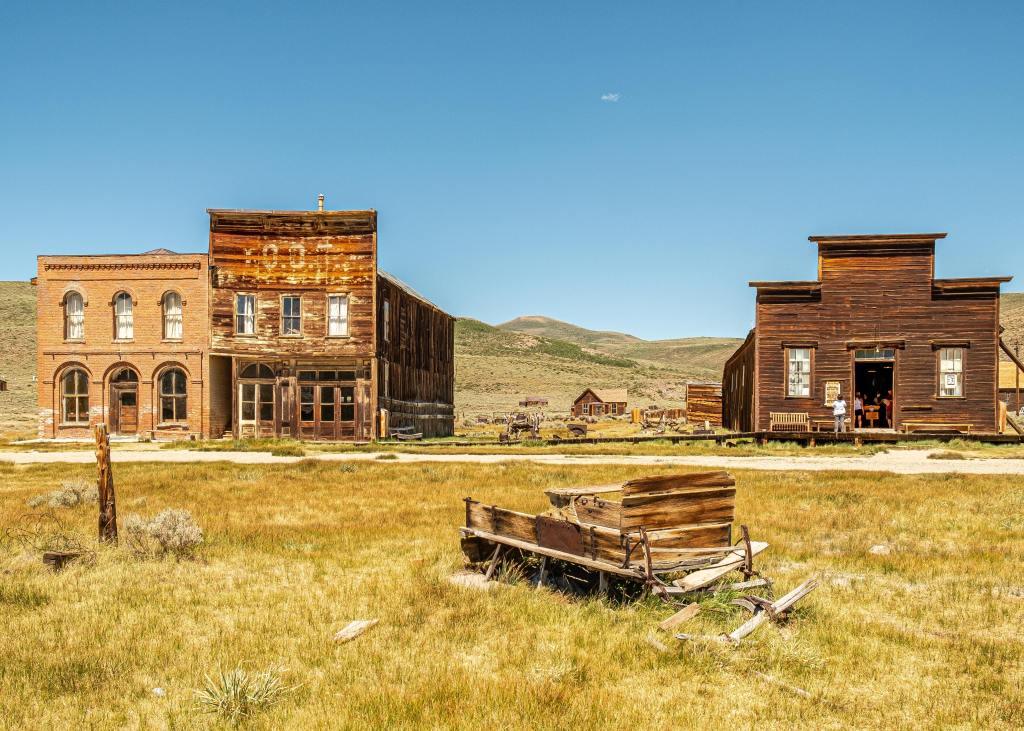
Ghost Towns
Western towns sprang up like mushrooms
near gold and silver mines,
and when the mines played out,
mining towns fell on hard times.
Out in the desert you can visit ghost towns
and think of days gone by.
Hear eerie music, see shadowy ghosts…
At least, it’s fun to try!
Copyright© 2021 by Cheryl Batavia
My Favorite Classic Westerns
Into the West, a six-part series from executive producer, Steven Spielberg. Available on YouTube.
Two families, one Native American and the other White, live through the events of the American westward movement.
Little House on the Prairie, TV series based on the Little House series of books by Laura Ingals Wilder. Story of a family growing up on a farm near a small prairie town.
Michael Landon, Mellissa Gilbert, Karen Grassle, Melissa Sue Anderson.
Bonanza, TV Series. A rancher and his sons are involved in many issues of the day.
Lorne Greene, Michael Landon, Pernell Roberts, Dan Blocker.
Oklahoma, a movie musical about a girl coming of age on an Oklahoma farm.
Shirley Jones, Gordon McRae.
Paint Your Wagon, a movie musical comedy set in a Gold Rush mining town. A Mormon woman marries two men.
Clint Eastwood, Lee Marvin, Jean Seberg.
Seven Brides for Seven Brothers, a hilarious movie musical with critically-acclaimed dance sequences.
Howard Keel, Jane Powell.
Jeremiah Johnson, a movie that tells the story of a mountain man and his encounters with grizzly bears.
Robert Redford, Will Geer.
Dances with Wolves, a movie about a Civil War hero who is eager to see the old West and is assigned to a fort. Arriving at an abandoned fort, he gets to know a local tribe of Native Americans. He spends time in their camp, going on a buffalo hunt and falling in love with a white woman who lives with them.
Directed by and starring Kevin Costner.
River of No Return, a movie about danger, romance, and redemption on a river raft headed west.
Robert Mitchum, Marilyn Monroe.
Sarah Plain and Tall, movie. A mail order bride from New England becomes part of a farm family in the West.
Glenn Close, Christopher Walken.
McClintock, a hilarious western comedy movie reminiscent of Shakespeare’s “Taming of the Shrew.”
John Wayne, Maureen O’Hara.
Westerns on this List
The majority of the westerns on this list were chosen for authenticity. They allow the viewer to experience the American westward movement and life on the American frontier. Many of the westerns listed feature iconic actors and gorgeous western scenery.
Excellent documentaries about the old West have been made. Though they are not listed here, I like watching them.
The classic westerns listed are widely available on television, cable movie channels, Netflix, YouTube, Amazon Prime, and similar venues.
I hope you find something you enjoy!
For further information, try Wikipedia, a helpful source of information used for this post.
Copyright© 2021 by Cheryl Batavia


